
The brief, and the thirty minute conversation that starts every film
A good brief takes thirty minutes, and it can save three weeks. Every film we make starts with a conversation about what it needs to do, before anybody talks about what it should look like. This page explains what happens in that conversation, the questions we'll ask you, and what to do if you haven't written anything down yet.
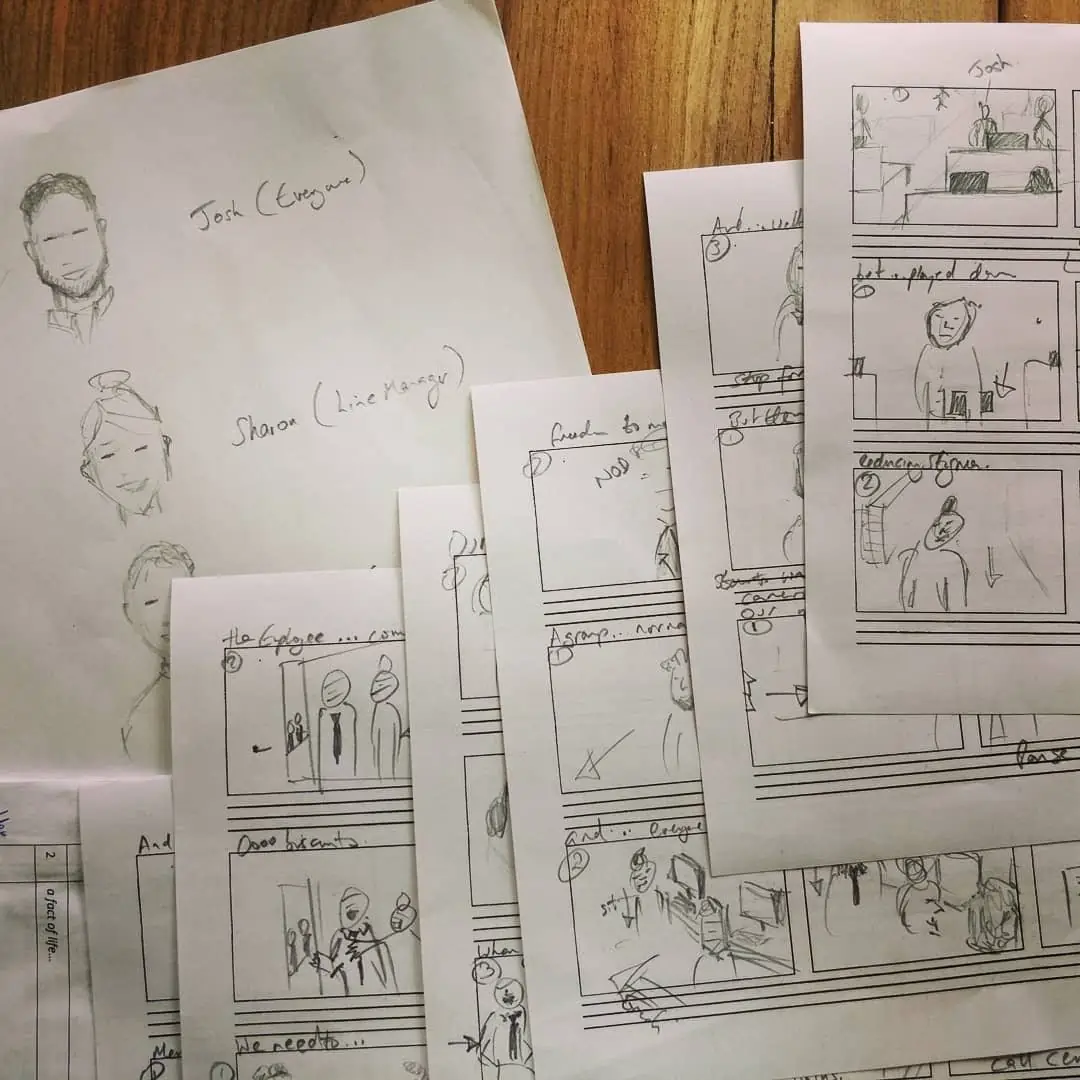
What the first brief usually sounds like
Most briefs arrive in pieces, and that's fine. Somebody says "we need a video", and somebody else wants something like the one that bank did. It has to be cinematic, and short, and detailed. Everyone in the leadership team needs to be in it, and there should definitely be drone shots.
None of that is wrong, but none of it tells us what the film is for. A list of things the film should contain is a production wish list, and it's our job to turn it into an objective. So the conversation starts by putting the wish list to one side for half an hour.
The thirty minute conversation
It's a call or a coffee, not a pitch, and there's nothing to prepare. We'll ask what's prompted the film now, and what happens if you don't make it. We'll ask who else needs to approve it, because a film that one person loves and three people haven't seen is a film that gets recut in week five.
By the end of it we'll both know whether a film is the right answer. Sometimes it isn't, and we'd rather say so then than after you've paid for one. When a film is the answer, we'll come back with a treatment and a fixed price proposal that shows exactly what you're getting and why it costs what it costs.
The questions we ask
Four of them matter more than the rest.
Who is actually watching this? Not "our audience", but a person. A film for your own staff is a different brief from a film for cold prospects, even when it's about the same company.
What do they believe right now? If they already trust you, the film can get on with it. If they've never heard of you, it has to earn the next ninety seconds first.
What should they do next? Apply, book a call, choose your school or sign off a budget. If nobody can say what the viewer does after the last frame, the film doesn't know where it's going.
Where will it live, and for how long? A homepage film has to last three years. A LinkedIn cut has to stop a thumb in two seconds. Knowing that before the shoot changes what we film and how we frame it.
What a good brief contains
Put those answers together and a sprawling brief often becomes one sentence. A recruitment brief might end up as one line. Show a senior engineer why this is a better place to build a career than the bank she's already at. That sentence is worth more than twenty pages of brand guidelines, because every decision on the shoot can be checked against it.
Beyond that, a good brief is short. It tells us the outcome you want, the audience, any hard constraints such as length, channels, compliance or people who must appear, and the budget and the deadline. A range is fine for the budget. Telling us lets us say honestly what's possible within it, instead of proposing something you can't afford and negotiating down.
The best briefs are just honest. They give the real objective rather than the stated one, and they include the constraint you're embarrassed about. That might be the budget that's lower than you wanted, the subject who's nervous on camera, or the message that's already changed three times. All of that is useful, and none of it is a problem.
If you haven’t got a brief
Most people haven't, and you don't need one to get in touch. A half formed idea, a problem you think a film might solve or a link to something you liked is plenty to start with. The thirty minute conversation is how the brief gets written.
If you'd like to put something on paper first, there's a template in our guide on how to brief a video production company.
What happens next
Once the brief is agreed, it becomes a treatment, a production plan and a shoot date, and you can see each step on how we work. If you're ready for the thirty minutes, start a project and tell us as much or as little as you've got.