
Nervous on camera? How we film people who have never been filmed
If someone on your team is dreading the camera, they're far from alone. Nearly all the people we film tell us they'll be terrible at it, and they're usually wrong, because nerves come from the way people are asked to do it, and that part is our job. Below is what we do before the camera appears, how we film without scripts, and what we do instead if someone really won't be filmed.
Why it feels so hard
Think about what an interview usually asks of somebody. They're taken away from their desk, sat under lights in front of strangers, and asked to say something important in one go. Often they've been handed talking points the night before, so they spend the whole time trying to remember the approved words instead of saying what they think.
You can feel it straight away on screen. The sentences are too polished, the answers don't quite respond to the questions, and there's no hesitation and no detail. It looks and sounds like what it is, which is somebody reading from their memory of a brief. It isn't that they're bad on camera. It's that nobody let them be themselves.
How to look good on camera, and what we do instead
We spend time with people before the camera appears. It's a conversation, with nothing recorded, about what happened and what they actually think. We're listening for the specific things, like a number, a name or a moment that only they'd know, and those become the backbone of the interview. By the time we film, they've already said the best lines once, out loud, to somebody who was interested.
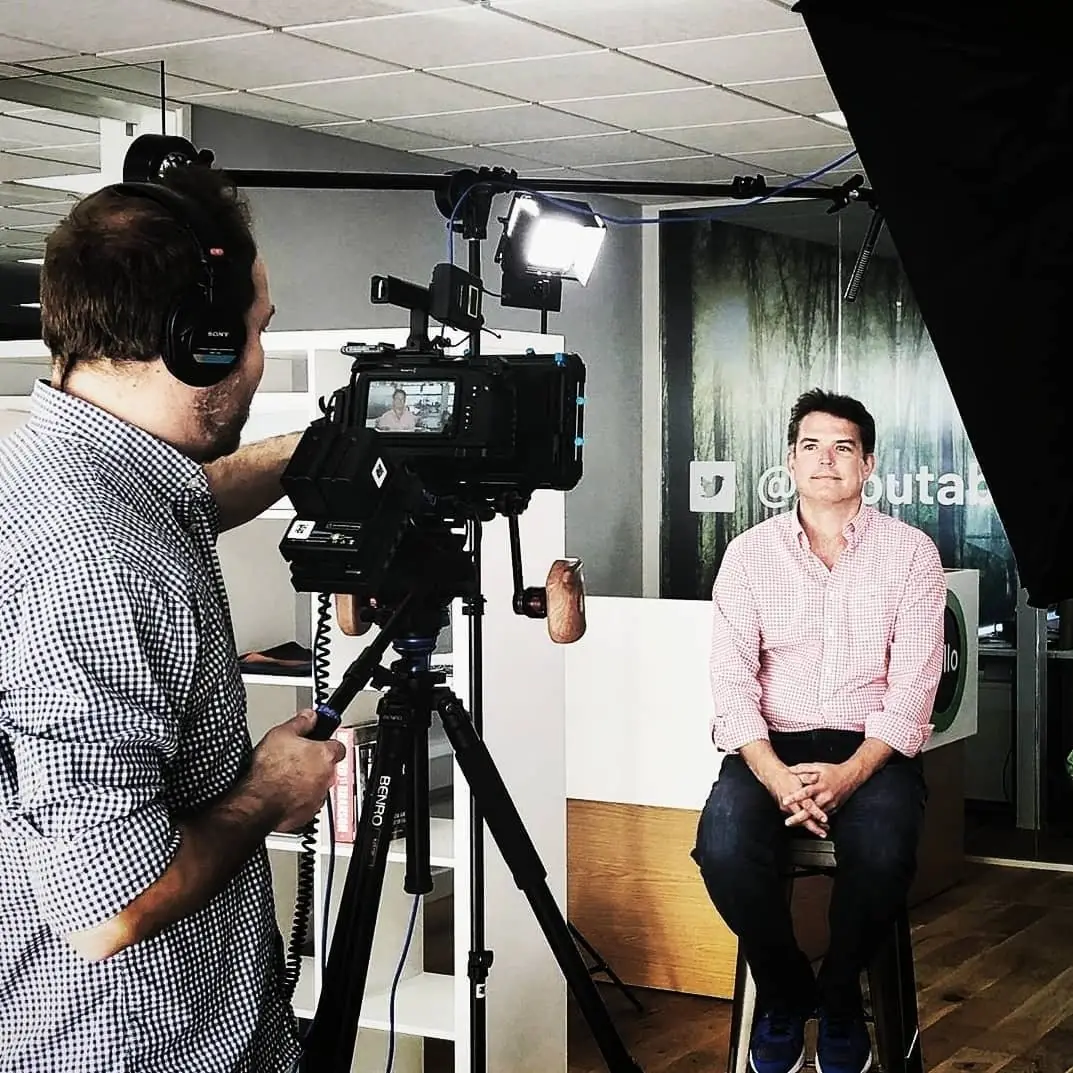
Everything is ready before anyone sits down. The set is lit, the chair is empty and the sound is checked, so nobody waits under the lights while we fiddle with kit. Then we don't use scripts. People know the broad ground we'll cover, but the answers are theirs, and we ask the questions in a way that invites the specific answer rather than the safe one.
This is the part of the job we care about most. When people feel listened to, they say the true things instead of the safe ones, and the audience can hear the difference. It's what makes a recruitment film, a testimonial or a founder film something viewers believe.
Over-briefed is worse than nervous
The most common problem isn't nerves at all. It's a contributor who's been over-briefed by their own communications team, so they're nervous about saying the wrong thing rather than about the camera. When we filmed investor testimonials for ASK Partners, a property lender, that was the risk. Financial services testimonials tend to come out polished and completely inert.
If your people have been briefed to death, tell us in the first conversation. We'll film them without scripts, on ground you've agreed, so they say what they think instead of what was approved. That's how the ASK Partners investors were filmed, and the films sound like a conversation between people who mean it.
Young people, and people who didn’t ask to be filmed
Schools are the hardest test. Over-directed students, or students who've been told what to say, produce footage that parents can read as arranged at a glance. For International Women's Day at Culford School, we made a film written by the young women who appear in it. It's their words and their ideas, and our job was to film it in a way that did them justice.
The same approach works with staff in a recruitment film, a patient sharing their experience or a founder who hates the sound of their own voice. Nobody has to perform. They just have to talk to somebody who's paying attention.
And if you’d really rather not
If you have someone who really won't do it, tell us before anything is booked. Customers, a voiceover over footage of the work or animation can all carry a film, and the thirty minute first conversation is free and ends with a straight answer on whether a film will help.
Where to go next
If your film needs real customers talking about real results, our testimonial video production page explains how those films are built, and interview filming covers what happens on the day for anyone in front of the camera. If you've got somebody nervous in mind already, tell us about them when you start a project. The first conversation is free, and it's the best place to begin: we'll tell you straight how we would film them, or whether a film is the right answer at all.